Are Index Funds Making the Market "Irrational"?
Are Index Funds Making the Market "Irrational"?.

The above button links to Coinbase. Yahoo Finance is not a broker-dealer or investment adviser and does not offer securities or cryptocurrencies for sale or facilitate trading. Coinbase pays us for certain activity generated through this link. Prices displayed are informational.
In this episode of Motley Fool Hidden Gems Investing , Motley Fool contributors Jon Quast, Matt Frankel, and Rachel Warren discuss:
To catch full episodes of all The Motley Fool's free podcasts, check out our podcast center . When you're ready to invest, check out this top 10 list of stocks to buy .
Missed Nvidia in 2009? This Rare Signal Is Flashing Again. In 2009, a "Double Down" signal flashed for a little-known chipmaker called Nvidia. For the first time in years, that same "Total Conviction" signal is flashing for a company 1/100th the size of Nvidia. Continue »
The Motley Fool Stock Advisor analyst team just identified what they believe are the 10 best stocks for investors to buy now… and SK Hynix wasn't one of them. The 10 stocks that made the cut could produce monster returns in the coming years.
Consider when Netflix made this list on December 17, 2004... if you invested $1,000 at the time of our recommendation, you'd have $371,842 !* Or when Nvidia made this list on April 15, 2005... if you invested $1,000 at the time of our recommendation, you'd have $1,244,783 !*
Now, it's worth noting Stock Advisor's total average return is 900% — a market-crushing outperformance compared to 207% for the S&P 500. Don't miss the latest top 10 list, available with Stock Advisor , and join an investing community built by individual investors for individual investors.
Jon Quast: Are index funds making the market irrational? You're listening to Motley Fool Hidden Gems Investing . Welcome to Motley Fool Hidden Gems Investing . I'm Jon Quast, and I'm joined today by Foolish contributors Matt Frankel and Rachel Warren. Before you dive into today's episode, do yourself a favor. Head over to news.fool.com and sign up for Breakfast News. It's a free daily email from The Motley Fool, landing in your inbox by 7:30 AM every morning, packed with the stories long-term investors actually want to know about.
We're going to tackle some topics today on today's show. We have actually two topics about ETFs from our mailbag. Something like that you wouldn't necessarily find in Breakfast News, but you might find something in breakfast News similar to the story we're leading with here, and that is the topic that we have regarding SK Hynix . Now, SK Hynix is a computer memory company based in South Korea, and it's already publicly traded there in South Korea. But as early as this week, it does plan to list some American depository shares here in the U.S. or ADR. It's going to trade under the ticker symbol SKHY, and it's targeting to sell nearly 178 million ADR shares. That will hopefully raise roughly $28 billion. It needs some money to build new factories and furnish them with chipmaking equipment. Now, one could say with AI, GPUs aren't holding anything back. It's the computer memory, finding specifically that high-bandwidth memory. That is what these companies need right now. That is what we are not making enough of. My first question here to you, Rachel, is what exactly is high-bandwidth memory, and who makes it?
Rachel Warren: High-bandwidth memory or HBM, as it's commonly known for short, that's basically the ultimate data superhighway for artificial intelligence. Traditional memory chips sit far away from the computer processor. That is creating major data traffic jams, particularly in the age of intensive AI applications with memory aims to solve this by stacking memory chips vertically like a skyscraper, if you will, and placing that entire stack right next to the main processor. This lets massive amounts of data travel, in some cases, up to 10 times or more faster while using way less power.
In short, we're at a time where AI processors are constantly starved for data, high bandwidth memory is the only memory fast enough to keep them fed. Now, right now, making these chips, it's so complex. It's so expensive. There's only three companies in the world that control this entire market. SK Hynix is the undisputed king of the mountain of this space. They command over 50% of the market as the primary memory supplier for Nvidia 's AI chips. Now, the other two players are Samsung , global memory giant, also based in South Korea, and Micron , the only major player based in the U.S. Because building these high-tech factories requires billions and billions of dollars, SK Hynix is coming to Wall Street to secure the cash they need to stay ahead in this very intense race.
Jon Quast: I think that so many investors missed the whole memory trade because historically, memory is such a commoditized market, and there are so many fears related to historic patterns when it comes to this commoditization. But right now, it is enjoying these companies, specifically SK Hynix, enjoying these incredible business economics. I would say it's very smart for it to capitalize on the trend right now, go public here in the U.S., raise that capital that it needs. It's good IPO timing, no doubt. I am curious here about long-term shareholders. Do either of you think that SK Hynix is a good investment when it comes public, or are you looking at that $28 billion that it's going to be raising and saying, maybe there's a secondary beneficiary here because that money is going to go somewhere?
Rachel Warren: There's no denying that SK Hynix, they're riding an incredible wave and timing this U.S. listing during what is essentially peak AI euphoria. I think it's a brilliant move from a corporate perspective. Now, I am not planning to buy shares at any point in the near future, and my hesitation comes down to a few things. Obviously, there's capital intensity, but there's also a long-term cyclical risk. I mean, building and equipping these facilities requires an astronomical amount of cash, as I was discussing. As a shareholder, my concern is that buying in today means you're betting that AI demand will remain hot enough for long enough to absorb all this new capacity. Even if it does, there is a lot of excitement that's baked into the stock right now. I prefer not to buy newly listed stocks straight out of the gate. I understand SK Hynix is listed internationally.
Now, if as SK Hynix is deploying billions into infrastructure, a massive portion of that capital flows directly into the order books of a lot of companies, including the semiconductor equipment giants like ASML , Applied Materials , and research. Those are companies, those are equipment suppliers that essentially get paid to furnish and tool these factories upfront. That's actually much more where my interest personally lies. There's significant revenue backlogs that are really locked in, regardless of whether the memory market faces some a supply glut a few years down the road. For me, I'm more interested in capitalizing on that guaranteed capex, but I certainly see that there will be many investors that are primed to buy shares of SK Hynix.
Matt Frankel: I'd add a few things here. First, I'm not surprised at all to see this listing. In fact, I'd argue that it would be irresponsible not to raise capital through equity sales at these levels. Micron's valued at over $1 trillion. I think they should raise more capital if they need it. Having said that, you won't see me buying SK Hynix or Micron at these levels anytime soon. Rachel's right that the equipment suppliers are really the play to watch. But I really don't put all three of them in the same basket. Specifically, ASML is the only company that makes those EUV lithography machines, and their orderbook is already stretched out for years. It's not just a memory-specific play. Whatever the industry is doing in a few years, it's going to be fine.
On the other hand, Lam Research is much more of a memory. That makes up more than half of its revenue. I'm a little bit more concerned about that long term, especially if this remains a commoditized business. Applied materials I put in the middle ground. It's got a very diverse revenue stream, great demand, not terribly levered to the memory business, but it's not exactly a monopoly like ASML has. The equipment names aren't exactly immune to cyclicality. Look at 2023 when all of the memory companies that we mentioned cut their capex around the same time in response to slumming demand, all the equipment makers took a big debt. If AI is truly a structural change for the memory industry and reduces the cyclical nature of it, all three of them could be big winners, but that's still a very big if at this point.
Jon Quast: Well, based on my portfolio, I think I'm taking the bet that it's an I and hoping that this continues to be a structural change in the market. Well, after the break, we're going to dive into the mailbag. Looking at some interesting ETFs that have to do with private companies, you're listening to Motley Fool Hidden Gems Investing .
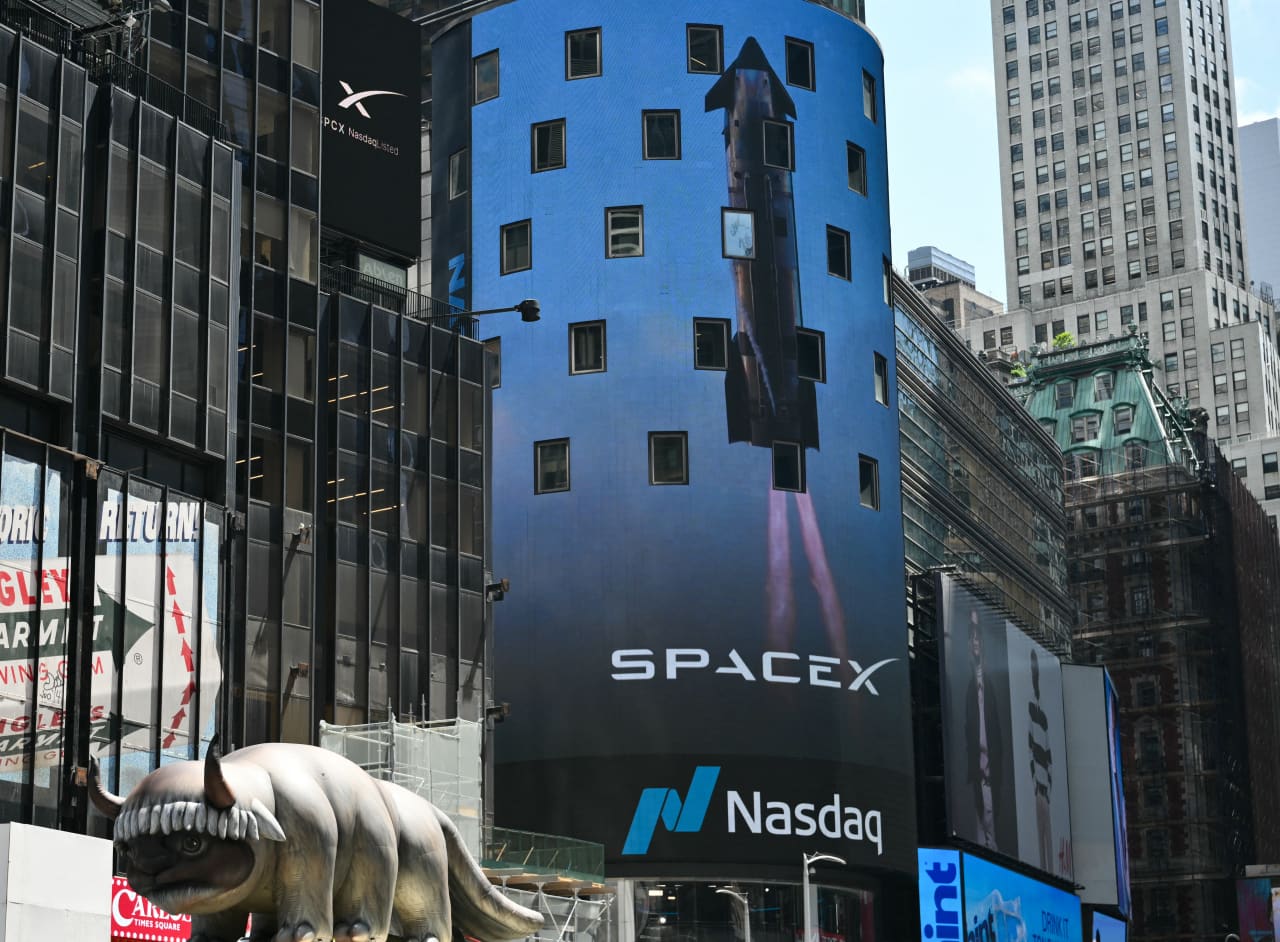
Welcome back to Motley Fool Hidden Gems Investing . I'm going to be honest, the news over the weekend was pretty thin, but I'm actually pretty thankful for that because it does allow us to double-dip into the mailbag today. First up here, we do have a question about some ETFs. I'll just read it as it is. Now that SpaceX has debuted and other AI companies are close to IPO as well, what happens to ETFs that hold shares of these companies after they go public? I know that XOVR and VCX and other ETFs hold pre-IPO shares of one or more of them, but have they stated whether they will hold them for the long term or flip them when possible? Since SpaceX had a nice pop, but is now settling down, is one just better off avoiding the ETFs and trying to buy the shares directly, if one believes the narratives. To me, the listener is basically asking about ETFs in general, but also mentions two ETFs specifically. The ones that he mentioned specifically are ER shares, a private public crossover ETF, and the Fundrise Innovation Fund. But I think we should mention before we go any further, that those two ETFs, they're actually not quite the same thing. There are some differences that are important to point out.